How mobile gaming user behavior creates a new model for app engagement, loyalty, and monetization.
By Mariah Marmol
Sr. Director, Growth & Development | AdAction
3 Billion Users, One Daily Habit
Mobile gaming is often misunderstood as a category. It is not a category. It is a daily behavior, and it is happening at a scale most brand and platform leaders have not fully internalized.
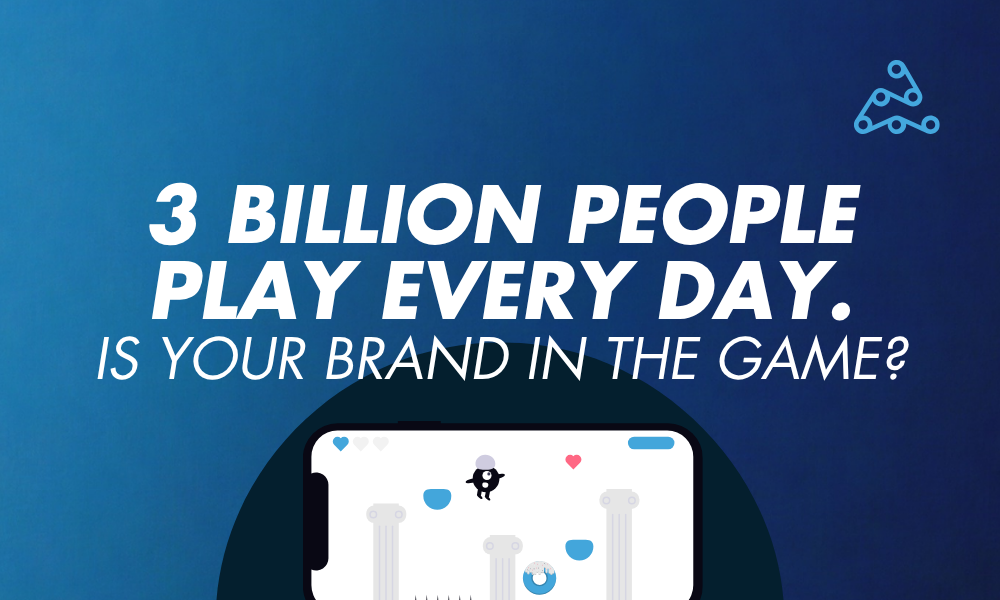
This is a $100B+ global industry. But the revenue figure actually understates the opportunity. What matters more is the mobile gaming user behavior behind it: over 3 billion people worldwide engage with mobile games. In the U.S., the audience closely mirrors the core demographics most brands are trying to reach. It skews slightly female, largely falls within the 25–54 age range, and is heavily composed of working professionals and parents.
Most of these users would never call themselves gamers. They are filling moments throughout their day. Waiting in line. Sitting on the couch at night. Taking a break between meetings. On average, users spend 4–7 hours per week in mobile games, spread across multiple short sessions each day. The behavior is habitual, lightweight, and consistent.
That consistency is what makes it powerful for any platform trying to build daily engagement habits.
Your Customers Are Already There. Your Brand Isn’t.
Your customers are already engaging in mobile gaming ecosystems. They are opening apps multiple times per day, building habits, and spending meaningful time in these environments. That engagement is structured and repeatable. It is part of their daily routine.
But none of it is connected to your brand.
The attention is there. The frequency is there. The mobile gaming app engagement is already proven. The connection to your ecosystem is what’s missing.
The opportunity is not to create a new behavior. It is to connect your platform to a behavior that already exists and is already happening at scale. This applies whether you operate a loyalty app, a fintech platform, a QSR ecosystem, a retail rewards program, an entertainment app, or any consumer-facing product with an engaged user base and a need for deeper, more frequent interaction.
Why Mobile Gaming Drives Engagement Where Other Channels Fail
Mobile gaming is one of the most effective app engagement engines in any digital channel, not because of what it is, but because of how it works.
It is designed for frequency. Users do not open once a week. They open multiple times a day. Sessions are short, low friction, and easy to repeat, which allows them to fit naturally into daily routines. Over time, built-in progression systems create a reason to return, reinforcing the habit without requiring constant re-engagement tactics from your team.
This stands in contrast to most loyalty and engagement experiences, which are reactive and tied to transactions. The app shows up at the point of purchase and disappears immediately after. There is no real role for it between visits. No reason to open the app on a Tuesday evening. No mechanism for building a daily habit around the platform.
Mobile gaming fills that gap. It creates consistent, repeatable activity in the moments where your brand typically has zero presence. And because the engagement is opt-in, users choose to participate rather than being interrupted. That distinction matters for both experience quality and long-term retention. Opt-in engagement outperforms interruptive formats like push notifications, banners, and interstitials because the user is already in a motivated, active state.
From Transactional Loyalty to Continuous Engagement Through Mobile Gaming
Traditional loyalty is transactional. A user makes a purchase, earns points, and leaves. Engagement is episodic and dependent on spend. Between transactions, the relationship goes dormant.
Mobile gaming for loyalty programs changes that model by introducing a reason to engage outside of the transaction. Users now have a reason to open your app multiple times per week, even when they are not actively buying. The engagement is not a gimmick. It is structurally tied to progression, habit formation, and reward accumulation.
What makes this effective is that the value earned through gameplay is tied directly back to your ecosystem. Whether it is points, wallet value, or rewards, users are not just playing. They are progressing toward something that brings them back to your brand.
This creates a self-reinforcing loop: play, earn, return, redeem, repeat. Each cycle deepens the relationship between the user and the platform.
Over time, this drives stronger D7/D30/D90 retention, higher engagement frequency, and deeper brand familiarity. Loyalty program engagement moves beyond transactions and becomes part of a user’s routine. Your app is no longer tied to a single moment. It occupies a consistent position in their day.
Engagement Without Interruption: Aligning With Attention Instead of Competing for It
Most brands are still operating in a model where they fight for attention. Push notifications, email campaigns, and promotional messages are all attempts to interrupt what a user is already doing and redirect them.
That model is inherently limited. Notification fatigue is real. Email open rates decline over time. Promotions train users to wait for discounts rather than engage with the platform on its own merits.
Mobile gaming introduces a fundamentally different approach. Instead of competing for attention, you align with it. You embed your brand into a behavior users are already choosing to engage with daily. The user is not being pulled away from something. They are actively opting in to an experience that creates value for them and for your platform simultaneously.
You are no longer asking users to come back. You are giving them a reason to.
How to Monetize Non-Paying Users With Advertiser-Funded Rewards
For most consumer apps and platforms, only a small percentage of users ever generate direct revenue through purchases, subscriptions, or IAP. The rest of the user base consumes the product but contributes nothing to the bottom line. Traditional approaches to monetizing these users rely on interruptive ad formats that degrade the experience, or promotional spend that erodes margin.
Mobile gaming introduces a different model entirely. The rewards users earn through gameplay are advertiser-funded. Users still receive real, tangible value: points, currency, cashback, perks. But that value is not subsidized by your business. Advertisers pay for verified user actions, and the revenue flows to you as the publisher.
This fundamentally shifts the economics. You can monetize non-paying users and increase ARPDAU without disrupting the experience of your paying users and without adding promotional cost. Engagement is no longer something you pay for. It becomes something that generates incremental revenue while simultaneously driving user value, session frequency, and retention.
The result is a system that compounds. Higher engagement drives more reward activity. More reward activity drives more advertiser interest. More advertiser revenue funds better rewards. The loop reinforces itself.
For platforms evaluating this model, the key consideration is ecosystem control. The right infrastructure keeps all engagement inside your app, all data under your ownership, and all reward value tied to your ecosystem. No loyalty leakage to external platforms. No competing consumer-facing apps pulling users away from your brand. Your users, your data, your loyalty.
The Decision: Capture the Behavior or Let It Create Value Somewhere Else
This is not about adding a feature or testing a new channel. It is about recognizing a behavior that already exists at scale and deciding whether your brand participates in it.
Your customers are already playing. They are already forming habits. They are already engaging daily, often for hours each week across multiple sessions. That mobile gaming user behavior is real, measurable, and consistent.
The question is not whether the behavior exists.
The question is whether it continues to create value somewhere else, or whether you choose to connect it back to your ecosystem and turn it into retention, engagement, and compounding LTV.
The infrastructure to do this exists today. The model is proven. The economics work. What remains is the decision to act.
Ready to connect mobile gaming behavior to your platform?
Contact us to learn more about AdGem Rewards™ and AdGem Arcade™.